-
Rifamycin SV-MMX for Traveler’s Diarrhea: A Safer Alternative to Ciprofloxacin
If you’ve ever traveled to India, Southeast Asia, or Latin America, you know the feeling. Day three of the trip, halfway through breakfast, and your stomach turns. Traveler’s diarrhea (TD) is the most common health problem international travelers face. Up to 30% will get it within their first two weeks abroad. For decades, the standard advice was simple: pack a course of ciprofloxacin. It worked. But that recommendation has been looking increasingly shaky for years, and a study finally puts hard numbers on something clinicians have suspected: we need alternatives that work and don’t make the antibiotic resistance problem worse. The Study That Changed the Conversation Between 2010 and 2016, researchers ran…
-
Clinical Insights: Resistance Mechanisms of Common Drugs for Clostridioides difficile Infection
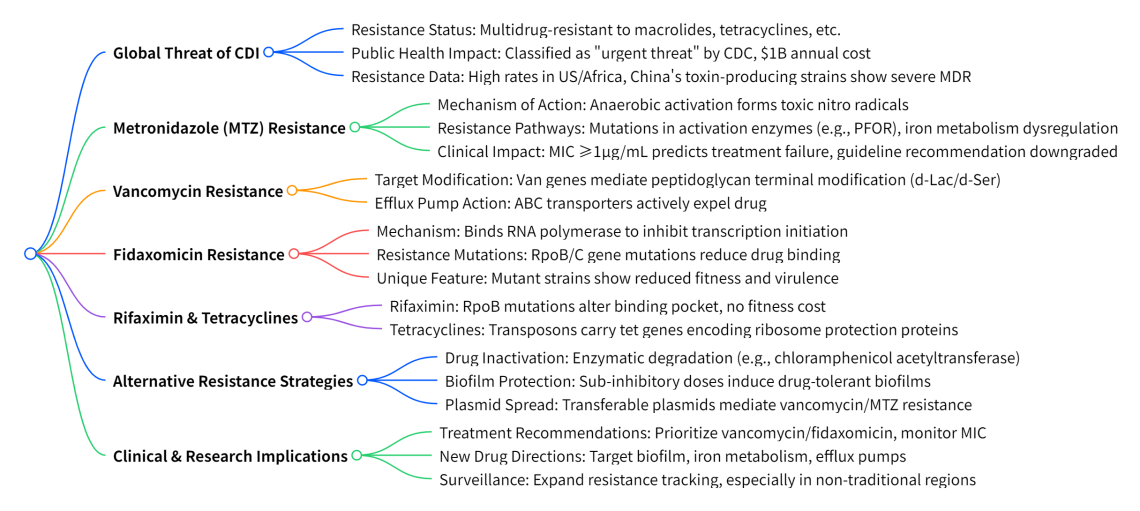
Clostridioides difficile (CD) infection (CDI) remains a pressing global health challenge, driven by increasing antimicrobial resistance (AMR) and the bacterium’s ability to thrive in gut environments disrupted by antibiotics. Let’s explore how CD develops resistance to commonly used drugs, why this matters for treatment, and what it means for future therapies. The Growing Menace of CDI and Antibiotic Resistance CD is a spore-forming bacterium well-known for resisting multiple antibiotics like macrolides, tetracyclines, and fluoroquinolones. When broad-spectrum antibiotics wipe out the protective gut microbiota, CD takes advantage, overgrowing and producing toxins that cause severe diarrhea, colitis, and even life-threatening complications. Since 2013, the U.S. CDC has labeled CD as an “urgent…

Professional manufacturer of Rifamycin derivatives since 1994