-
Complicated UTI antibiotics: why ceftriaxone held its own
For hemodynamically stable adults hospitalized with a complicated urinary tract infection, ceftriaxone performed about as well as every broader-spectrum antibiotic tested. A 2026 network meta-analysis of 17 randomized trials found no significant clinical-response advantage for carbapenems, newer beta-lactam combinations, or aminoglycosides. The broader complicated UTI antibiotics did clear bacteria from urine more often, but that laboratory edge never turned into better cure rates. Why empirical antibiotic choice in complicated UTI is so hard Complicated urinary tract infections (cUTIs) are not one disease. The label covers acute pyelonephritis, urinary tract infection with systemic signs of infection, and infection that arises behind a structural or functional abnormality of the urinary tract, including…
-
Rifaximin for SIBO: what 39 studies actually show
Rifaximin for SIBO: the short answer Rifaximin for SIBO is the most studied antibiotic in adults. It also has the best balance between symptom relief and side effects. What it does not have is the best record on breath tests. In the only trial that put three antibiotics head to head, metronidazole cleared more breath tests. Rifaximin did more for abdominal pain and bloating, and caused fewer adverse events. Pick your endpoint first, then pick your drug. Around 40 to 45 percent of patients relapse within 9 to 12 months. Bacterial counts below are given in colony-forming units per milliliter (CFU/mL), and breath gas in parts per million (ppm). What…
-
PCMX and Antibiotic Resistance: How a Common Disinfectant May Be Fueling the Spread of Superbugs
Every time you wash your hands with antibacterial soap or reach for a bottle of hospital-grade disinfectant, you probably assume you’re doing something straightforward: killing harmful bacteria. The science, it turns out, is considerably more complicated — and a new study suggests that some of the chemicals we rely on to control microbial life might be accidentally accelerating one of humanity’s biggest public health threats: antibiotic resistance. The invisible problem in our water Antibiotic resistance — the ability of bacteria to survive drugs designed to kill them — is quietly becoming one of the most serious challenges in modern medicine. Common infections that were once easily treated with penicillin or…
-
Busting Common Myths in Antibiotic Therapy: What Every Clinician (and Patient) Should Know
Imagine this: A patient with a mild community-acquired pneumonia is admitted to the hospital and prescribed 14 days of intravenous (IV) antibiotics. Their doctor argues, “IV is stronger, and longer courses prevent relapses.” But what if this well-intentioned choice is based on outdated dogma—not science? A 2025 study published in Revista Española de Quimioterapia (Spanish Journal of Chemotherapy) by a team of Spanish infectious disease experts—including researchers from Valencia’s La Fe University Hospital and La Fe Health Research Institute—sets out to debunk these and other persistent myths in antibiotic use. Titled Legends, dogmas, presumptions, and demystifications in antibiotic therapy, the paper is a call to action: to replace “status quo”…
-
Clinical Insights: Resistance Mechanisms of Common Drugs for Clostridioides difficile Infection
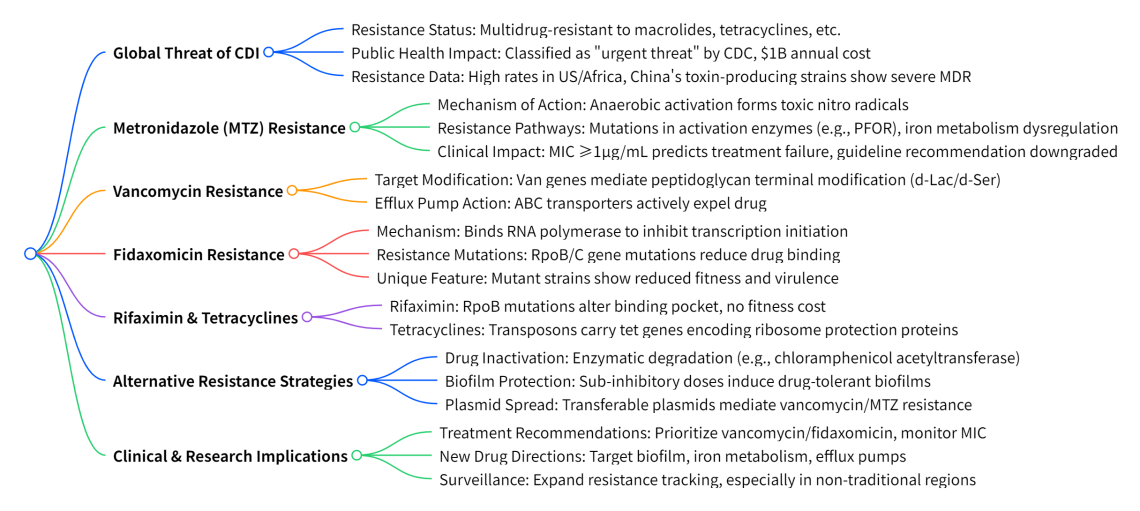
Clostridioides difficile (CD) infection (CDI) remains a pressing global health challenge, driven by increasing antimicrobial resistance (AMR) and the bacterium’s ability to thrive in gut environments disrupted by antibiotics. Let’s explore how CD develops resistance to commonly used drugs, why this matters for treatment, and what it means for future therapies. The Growing Menace of CDI and Antibiotic Resistance CD is a spore-forming bacterium well-known for resisting multiple antibiotics like macrolides, tetracyclines, and fluoroquinolones. When broad-spectrum antibiotics wipe out the protective gut microbiota, CD takes advantage, overgrowing and producing toxins that cause severe diarrhea, colitis, and even life-threatening complications. Since 2013, the U.S. CDC has labeled CD as an “urgent…

Professional manufacturer of Rifamycin derivatives since 1994